Fundamentals · GUIDE
Understanding Equity Crowdfunding: How It Works
An educational overview from StartEngine Primary, LLC (member FINRA/SIPC) of how regulated online investment platforms work, the key US exemptions that enable them, and important considerations and risks for investors, including illiquidity and the possible loss of the entire amount invested.
7 min read
Updated July 23rd, 2026
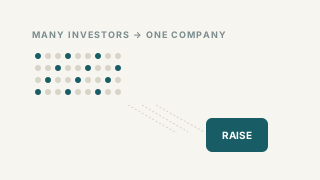
Equity crowdfunding refers to a set of regulated ways in which certain private-company securities can be offered to investors through online platforms. Before 2016, most opportunities to invest in early-stage or growing private businesses were generally limited to institutional investors, venture capital funds, and accredited investors. Today, subject to eligibility rules and the specific terms of each offering, additional categories of investors may be able to participate in certain private offerings through regulated online platforms. This article explains how equity crowdfunding is structured and what investors should understand before considering participation.
What Is Equity Crowdfunding?
Start investing in private companies today
Create your free account and explore investment opportunities on StartEngine.
Equity crowdfunding refers to raising capital for a business by offering securities — often shares of stock or other equity interests — to investors through an online platform operated by a registered broker-dealer or SEC-registered funding portal. Unlike rewards-based crowdfunding (for example, platforms where backers receive products or perks), equity crowdfunding involves the sale of securities, and investors receive the security described in the offering documents, which may be an equity interest, a convertible instrument, or another form of security.
When an investor purchases securities in an equity crowdfunding offering, the investor becomes a holder of the class of security described in the offering materials. Whether that interest ever produces any financial return depends on many factors, including the company's performance, capital structure, future financing rounds, the terms of the securities, and whether any liquidity event ever occurs. Many private companies do not achieve a liquidity event, and investors may lose some or all of the amount invested.
A Brief Regulatory History
Equity crowdfunding in the United States is enabled by federal securities laws that were expanded through the Jumpstart Our Business Startups (JOBS) Act, signed into law in 2012. The JOBS Act directed the SEC to adopt rules intended to permit certain smaller companies to raise capital from additional categories of investors, subject to eligibility, disclosure, and investor-protection requirements. The regulatory milestones below are provided as historical background about the legal framework only, and are not a track record of investment outcomes or performance.
Key regulatory provisions that helped shape today's online private-offering framework include:
- Title II (2013): Permitted general solicitation in certain Regulation D offerings sold only to verified accredited investors.
- Title IV (2015): Updated Regulation A (often called Regulation A+), creating tiered offerings that can be made to both accredited and non-accredited investors, subject to SEC qualification and ongoing reporting.
- Title III (2016): Established Regulation Crowdfunding (Reg CF), which permits certain offerings to be made to the general public through an SEC-registered funding portal or broker-dealer, subject to per-investor limits and disclosure requirements.
Offering caps, investor limits, and disclosure requirements under these rules have changed over time and may change again. Investors should refer to current SEC guidance and the specific offering materials rather than rely on any static figure.
How Equity Crowdfunding Works
Step 1: A Company Prepares an Offering
A company seeking to raise capital prepares an offering under an applicable exemption from registration (such as Reg CF, Regulation A, or Regulation D). This typically involves drafting disclosure documents, setting a target amount, describing the securities and their terms, and preparing risk factors. Filings and, where required, SEC qualification, must be completed before an offering can be conducted. An SEC filing or qualification does not constitute approval or endorsement of the offering or the securities.
Step 2: The Offering Is Listed on a Platform
The company lists its offering on an online platform operated by a registered broker-dealer or SEC-registered funding portal. The listing generally includes a description of the business, financial information, the team, risk factors, use of proceeds, and the terms of the securities. Investors can review this information before deciding whether to consider the opportunity.
Step 3: Investors Review and Decide
Investors evaluate the offering and, if eligible, may decide whether and how much to invest. Individual investment limits, investor qualification requirements, and eligibility may apply depending on the exemption used and the investor's income and net worth. Current limits and calculation methods are set by SEC rules and may be updated periodically; investors should consult the offering materials and current SEC guidance.
The investment process typically involves creating an account, completing identity verification, reviewing offering documents, indicating a subscription amount, and funding the commitment through the platform.
Step 4: Closing and Delivery of Capital
If the offering reaches the required minimum and other conditions are satisfied, funds are released to the company at a closing. The company uses the proceeds consistent with the use-of-proceeds disclosure in the offering materials. If minimum conditions are not met within the offering period, subscriptions are typically canceled and funds returned.
Step 5: Holding the Securities
After the closing, investors hold the securities they subscribed for, subject to the transfer restrictions and other terms described in the offering documents. Companies may provide periodic updates, though the frequency, detail, and reliability of updates vary. Private securities are generally illiquid, and there is no assurance that any liquidity event will ever occur.
The Regulatory Framework
The three most commonly used exemptions in online offerings are summarized below. Offering caps, investor limits, and other requirements are set by SEC rules and can change; the descriptions below are general and not a substitute for current SEC guidance or the specific terms of an offering.
Regulation Crowdfunding (Reg CF)
- Who may invest: Both accredited and non-accredited investors may be eligible, subject to per-investor limits and the terms of the offering.
- Investment limits: Non-accredited investors are subject to limits based on annual income and net worth, calculated under SEC rules. Refer to the offering materials and current SEC guidance for the specific limits that apply.
- Disclosure requirements: Financial statements (reviewed or audited depending on the amount raised and other factors), business description, risk factors, use of proceeds, and required ongoing reporting.
- Platform requirement: Offerings must be conducted through an SEC-registered funding portal or broker-dealer.
Regulation A (Tier 2)
- Who may invest: Both accredited and non-accredited investors may be eligible, subject to applicable limits and the terms of the offering.
- Investment limits: Non-accredited investors are generally subject to per-offering limits based on income or net worth (typically self-certified). Consult the offering circular for specifics.
- Disclosure requirements: More extensive than Reg CF, including audited financial statements and ongoing periodic reporting.
- SEC qualification: Offerings must be qualified by the SEC before sales can occur. Qualification is not an endorsement of the offering.
Regulation D (Rule 506(c))
- Who may invest: Verified accredited investors only.
- Investment limits: No SEC-imposed per-investor limits, though issuers may set minimums or other conditions.
- Disclosure requirements: No prescribed disclosure format, but antifraud rules apply and issuers must take reasonable steps to verify accredited status.
- General solicitation: Permitted under Rule 506(c), subject to verification requirements.
Characteristics of Online Private Offerings
Categories of Eligible Participants
Online private offerings under Reg CF and Regulation A allow certain private-company securities to be offered to categories of investors that historically had fewer opportunities to participate in private offerings. Eligibility, participation, and per-investor limits are governed by SEC rules and the terms of the specific offering. This characteristic is descriptive of the regulatory framework and is not a statement about the merits, quality, or expected outcomes of any offering.
Minimum Subscription Sizes
Minimum subscription amounts in online private offerings are set by the issuer and vary by offering. Some offerings set minimums that differ from those typical of other private placements. A given minimum size is a term of the offering and is not, by itself, an indication of suitability, quality, or expected outcome.
Disclosure Requirements
Because offerings are made under SEC exemptions, issuers must provide disclosures appropriate to the exemption used. These disclosures are generally less extensive than those required of fully reporting public companies, and investors should read them carefully, including the risk factors.
Issuer Communications
Some issuers communicate with their investor base through platform updates or investor communications. The frequency, quality, and reliability of such communications vary by company and are not a substitute for independent evaluation of the investment.
Key Risks to Understand
Illiquidity and Transfer Restrictions
Private securities sold in equity crowdfunding are generally illiquid. Reg CF imposes a holding period during which resales are restricted, with limited exceptions. Even after any holding period, transferring private securities may be difficult. Any secondary transaction typically depends on issuer consent, contractual transfer restrictions, applicable regulatory requirements, buyer demand, pricing, and available execution venues. Eligibility, availability, and timing of any secondary transaction are uncertain, and a sale may never occur.
High Rate of Business Failure
Early-stage and small companies face a high rate of failure. Investors in such companies may lose some or all of the amount invested, and losses can occur even in companies that appear to be performing well at the time of investment.
Limited Information
Disclosures for private-company offerings are typically less comprehensive than those for public companies, and independent research coverage is often unavailable. Investors are relying primarily on information provided by the issuer.
Valuation Uncertainty
The price per share in a private offering is generally set by the issuer and does not reflect a market-clearing price. Valuations disclosed by an issuer are negotiated estimates or reference points, not indications of current, fair, or realizable value. Security class, liquidation preferences, anti-dilution provisions, fees, and other terms can materially affect an investor's economic outcome.
Dilution
Companies commonly raise additional capital in subsequent rounds. Future issuances of equity, convertible securities, or options can reduce an existing investor's ownership percentage, and terms of later rounds may be senior to earlier rounds.
Considerations Before Participating
- Read the offering documents. Review the business description, terms of the securities, financial statements, risk factors, and use of proceeds carefully.
- Understand the terms of the security. Different offerings involve different instruments — common stock, preferred stock, SAFEs, convertible notes, or others — each with distinct rights and risks.
- Consider the time horizon. Private investments can remain illiquid for many years, and there is no assurance that a liquidity event will occur.
- Consider your own circumstances. Private-company investments are speculative and involve a high degree of risk, including possible loss of the entire amount invested. Consider consulting qualified financial, legal, and tax professionals about your particular situation.
- Stay informed. Follow issuer updates and material developments after investing, and be aware that available information may be limited compared with public companies.
Conclusion
Equity crowdfunding provides a regulated framework under which certain private companies may offer securities online, in some cases to additional categories of investors compared with the traditional framework. It combines SEC-defined disclosure and investor-protection requirements with online distribution. It is not a substitute for careful review of each offering, and it does not eliminate the fundamental risks of investing in private companies, including illiquidity, limited information, dilution, and the possible loss of the entire amount invested.
Important Disclosures
Securities are offered through StartEngine Primary, LLC, a registered broker-dealer and member FINRA/SIPC.
Neither the SEC nor any state securities regulator has approved these securities or passed upon the accuracy or adequacy of any disclosure.
This communication is for educational and informational purposes only and is not an offer to sell or a solicitation of an offer to buy any security.
This content is general educational information and is not investment, legal, or tax advice. Please consult qualified financial, legal, and tax professionals about your particular circumstances.
Investments in private companies are speculative, illiquid, and involve a high degree of risk, including the possible loss of your entire investment. There may be no public market for these securities, transfer restrictions typically apply, and there is no assurance that any liquidity event will ever occur.
Past performance is not indicative of future results.