Fundamentals · GUIDE
Public vs. Private Markets: Differences to Understand
Compare the structural, regulatory, and practical differences between public and private market investing, including liquidity, pricing, disclosure, access, and time horizons.
6 min read
Updated July 29th, 2026
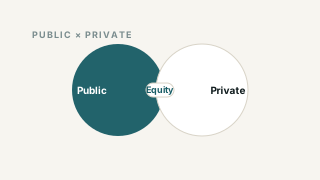
When many people think about investing, they think about the stock market — buying shares of well-known companies or index funds through a brokerage account. Public equities are only one part of a broader landscape. Private markets, where shares are not listed on public exchanges, are a distinct and sizable alternative. Understanding how these two environments differ is useful background for anyone learning about the investment universe.
What Are Public Markets?
Start investing in private companies today
Create your free account and explore investment opportunities on StartEngine.
Public markets are exchanges where securities of publicly listed companies are bought and sold. Well-known examples include the New York Stock Exchange (NYSE) and Nasdaq. When a company completes an initial public offering (IPO) and lists its shares, those shares can generally be purchased through a brokerage account subject to applicable rules.
Public markets generally have higher trading liquidity, extensive regulatory requirements, mandatory periodic disclosures, and continuously updated pricing that generally reflects supply and demand.
What Are Private Markets?
Private markets encompass investment transactions that occur outside of public exchanges. This includes venture capital, private equity, equity crowdfunding, private credit, and secondary transactions in private company shares. Companies in private markets have not conducted a public listing, and their securities are typically not freely tradable on an exchange.
Private markets are generally characterized by limited liquidity, infrequent valuations, negotiated transactions, and a different regulatory framework than public markets.
Differences to Understand
1. Access and Eligibility
Public markets are broadly accessible to individuals who can open a brokerage account and meet that broker's requirements. Many listed stocks can be purchased without a stated minimum share purchase amount, though brokerage rules, taxes, and fees still apply.
Private markets have historically been limited to institutional investors and accredited investors under SEC rules. Regulatory frameworks such as Regulation Crowdfunding (Reg CF) and Regulation A allow certain private offerings to be made available to non-accredited investors, subject to eligibility rules, per-investor limits, and other conditions that can change over time. Many private offerings remain restricted to accredited investors. Investor eligibility, investment limits, and other terms are set by each offering's documents and applicable SEC rules; individuals may wish to review the specific offering materials and current SEC guidance before investing.
2. Liquidity
Public markets generally allow shares of listed companies to be bought or sold during market hours, subject to trading halts, market conditions, and settlement periods.
Private markets are typically illiquid. When an investor purchases securities in a private company, there is often no established trading venue for the securities. Holders may be unable to sell for an extended period. Any potential sale may depend on issuer consent, transfer restrictions, regulatory review, buyer demand, and pricing, and a transaction may never occur. Liquidity events such as an IPO, acquisition, or secondary transaction are not assured. Illiquidity is a significant risk associated with private securities.
3. Information and Transparency
Public companies are generally required by the SEC to file periodic reports (such as annual 10-Ks and quarterly 10-Qs), disclose material events, and provide audited financial statements. This information is publicly available for review.
Private companies generally have fewer disclosure obligations. Companies raising capital under Reg CF or Reg A file specific disclosures with the SEC, but the depth and frequency of ongoing reporting is typically less than for public companies. Investors in private offerings often make decisions based on more limited information.
4. Pricing and Valuation
Public market prices are set continuously by transactions between buyers and sellers, so a current quoted price is typically available during trading hours.
Private market valuations are periodic and negotiated. A private company's valuation is generally set during a fundraising round, through an appraisal, or by another negotiated process, and represents an estimate or reference point at a specific date rather than a current, fair, or realizable market value. Between such events, the value of a holding is uncertain. Security class, liquidation preferences, dilution from future rounds, fees, and transfer restrictions can meaningfully change the economics of an investment.
5. Regulation
Public markets are regulated by the SEC, FINRA, and the exchanges. These rules govern listed issuers, brokers, and other market participants and are intended to support orderly markets and investor protection.
Private markets are also regulated, but under different frameworks. Private offerings typically rely on exemptions from full SEC registration — such as Regulation D, Regulation A, or Regulation Crowdfunding. Each exemption has its own rules about who may invest, how much may be raised, and what disclosures are required. Intermediaries that facilitate certain private offerings, such as broker-dealers and funding portals, are subject to SEC and FINRA oversight. Neither SEC registration nor qualification of an offering means the SEC or any state securities regulator has approved the securities or passed on the accuracy or adequacy of any disclosure.
6. Investment Minimums
Public markets often permit small purchases, and many brokers offer fractional shares.
Private markets vary widely. Traditional private equity and venture capital funds commonly set high minimum commitments. Offerings conducted under Reg CF and Reg A often have lower stated minimums, which are determined by each issuer. Actual minimums, fees, and terms are set out in each offering's documents.
7. Return Characteristics
Public markets can produce returns through price changes and, in some cases, dividends. Prices and any dividends are observable in real time, and short-term results can be volatile. Historical results of public indexes or individual companies are not indicative of future results.
Private markets involve a wide range of potential outcomes. Many private company investments result in partial or total loss of the amount invested. Any potential return is generally realized only if and when a liquidity event occurs, which is not assured. No specific return should be expected from either public or private investments.
8. Time Horizon
Public market investments can generally be bought or sold at the holder's discretion during market hours, subject to applicable rules.
Private market investments generally involve a long, indefinite holding period. Depending on the issuer and offering, investors may be unable to sell for several years, or ever. Investors should consider their own liquidity needs and the possibility that capital committed to private securities may be inaccessible for an extended period or permanently.
9. Visible Volatility
Public markets reflect daily price movements driven by earnings, economic data, geopolitical events, and sentiment. This visible volatility can be uncomfortable, particularly during market declines.
Private markets do not display continuous price changes. Lack of visible volatility does not mean lower risk; the underlying business, financing, and execution risks remain and are simply not marked to a public price.
How Public and Private Markets Interact
The boundary between public and private markets has evolved. Several trends contribute to this:
- Companies staying private longer. Many companies now remain private for a longer period before considering a public listing.
- Regulatory frameworks such as the JOBS Act created exemptions (Reg CF and Reg A) that allow certain private offerings to be made available to non-accredited investors, subject to conditions.
- Secondary transactions in private company shares exist in some cases, but are limited by issuer consent, transfer restrictions, regulatory requirements, buyer demand, and pricing. Any such transaction may not be available and is not assured.
- Technology platforms have expanded access to information about private offerings, though eligibility, terms, and risks remain offering-specific.
Considerations Before Participating
Public and private markets differ meaningfully in liquidity, disclosure, pricing, regulation, and time horizon. Whether either is appropriate for a particular person depends on that person's circumstances, objectives, financial situation, and risk tolerance. This article does not recommend any specific investment, allocation, or strategy. Nothing in this article evaluates whether any investment is suitable for any particular reader. Individuals considering private offerings may wish to review the offering documents and risk factors carefully and consider consulting qualified financial, legal, and tax professionals.
Conclusion
Public and private markets each have distinct characteristics. Public markets generally offer greater liquidity, standardized disclosures, and continuous pricing. Private markets can involve less frequent valuations, limited liquidity, more restricted disclosures, and a wider range of possible outcomes, including loss of the entire amount invested. Understanding these structural differences is a starting point for reviewing any specific opportunity on its own terms.
Important Disclosures
Securities are offered through StartEngine Primary, LLC, a registered broker-dealer and member FINRA/SIPC.
Neither the SEC nor any state securities regulator has approved these securities or passed upon the accuracy or adequacy of any disclosure.
This communication is for educational and informational purposes only and is not an offer to sell or a solicitation of an offer to buy any security.
This content is general educational information and is not investment, legal, or tax advice. Please consult qualified financial, legal, and tax professionals regarding your particular circumstances.
Investments in private companies are speculative, illiquid, and involve a high degree of risk, including the possible loss of your entire investment. There may be no market for the securities, and no assurance that a liquidity event will occur.
Historical results are not indicative of future results.
Past performance is not indicative of future results.
Start investing in private companies today
Create your free account and explore investment opportunities on StartEngine.
Terms in this article
Important disclosure
All content is for educational purposes only and does not constitute investment advice. All investments involve risk, including loss of principal. Please consult with a qualified financial advisor before making investment decisions.